Alumna Melyssa Stone (MEd, ’16) Named 2026 Washington State Secondary Assistant Principal of the Year
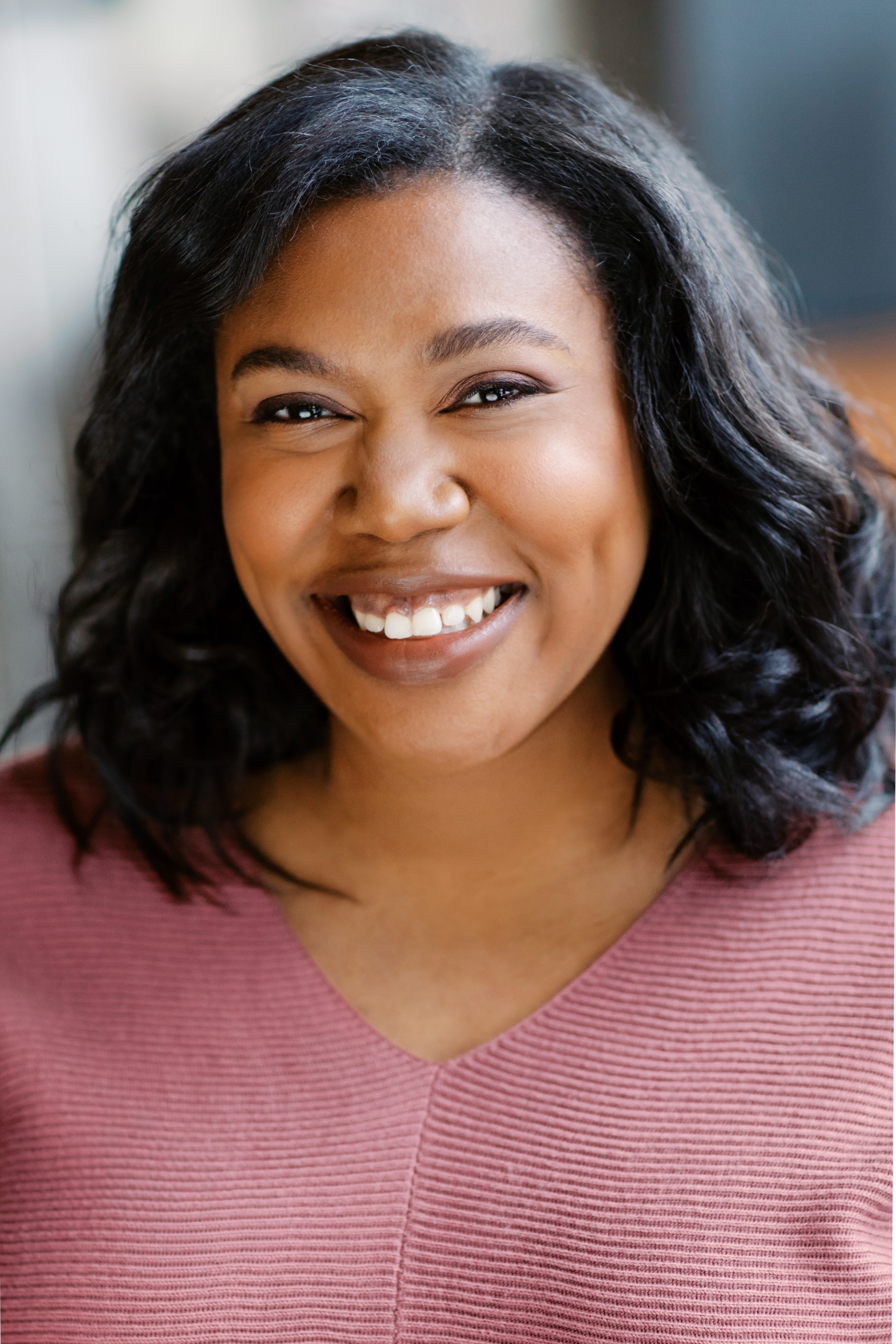
Shorewood High School Assistant Principal Melyssa Stone (MEd, ’16), a Danforth program alumna and longtime Leading Towards Justice steering committee member, has been named the 2026 Washington State Secondary Assistant Principal of the Year and was recently appointed by the Governor to the Professional Educator Standards Board.
Stone is recognized as a barrier breaker and leader who centers relationships, advocacy and care for every student. In this short video, students, staff and colleagues reflect on her impact through her work building trust, challenging systems and ensuring students are seen, heard and supported. Watch the video here.
Read the Q&A below to learn more about Melyssa’s leadership journey and the experiences that continue to shape her work.
Could you share a bit about your background and how you got into the field of education?
I’m the proud daughter of a public school educator. I grew up believing that the teacher’s lounge was the most magical place in the world, and I continued to be formed by educators who saw me, invested in my brilliance and helped remove barriers for me. My family has a history of women and men who have advocated for equitable education, tracing as far back as the 1870s. Education was not always a guarantee, but I stand on the shoulders of ancestors who built coalitions around that very right.
So, becoming an educator was inevitable in some way, shape or form. Formally, I studied here in Seattle and then completed my Masters in Educational Leadership & Policy Studies at UW, then I went on to receive my administrative certificate through the Danforth Program. I’ve worked in independent schools, have served in 3 school districts and now have the honor to serve both at a local and state educational level. But I’m a lifelong learner, and can’t help but be an educator, no matter where I am.
When you think about your journey into school leadership, what moments most shaped the leader you are today?
I was very drawn to Black writers as a bright-eyed young reader—Maya Angelou’s story about her teacher, Mrs. Flowers, in her autobiography I Know Why the Caged Bird Sings has always stood out to me, how a community teacher’s care gradually helped her break out of her silence and into her brilliance. She remarked, “I was liked, and what a difference it made.” That became a reference point I sought out from my own teachers as a very shy little girl, and a guiding light for how I wanted to lead. My own teachers’ care made that difference for me (shoutout to Dr. O’Doherty, Dr. Brown, Ms. Santorico, and Ms. Van Kempen!).
My greatest teachers are the communities I serve: there is so much as a school leader that we aren’t able to spotlight that takes place in the hard, dark, working-it-out moments of supporting students, but to be able to witness the wins are humbling and extraordinary. One thing that stands out to me is the joy of seeing students return after graduating, committed to helping their younger siblings find their way through school. There’s a joy in earning the trust of a family, and continuing partnership beyond 4 years—I wholeheartedly believe schools would do much better with more Aunties and Uncs in the workforce. :)
You center student voice in your work. Can you share a story of when listening to students changed the way you approached a challenge?
My students are incredibly honest—and their honesty is a gift. It helps me cut through the “educationese” and get straight to how things are landing for them.
I worked with a group of students as a club advisor who were sharing how they felt about what they were learning in class—these were first generation students who were very collectively driven, and they remarked that the narratives that were meant to reflect them in class often felt dimensionally flat, dismissive under the surface and steeped in ideas of “exceptionalism.” We got to roll up our sleeves and co-create some educational experiences for classmates, guide some teacher professional development around narratives and revamp community programming to uplift individual stories in a way that painted with broader strokes. It was a powerful reminder for me that young folks see more clearly than we do sometimes, and with relationship and trust, they’ll offer you insights on how to keep centered on their outcomes, with their teamwork at the helm.
You’ve led both inside your school and across the state. How do you carry what you learn in one space into the other?
It can be easy to get stuck in stagnancy as a leader, and I know that collective wisdom is key in sculpting structures on behalf of transformative learning. I have been fortunate enough to connect with amazing educational leaders both in and beyond my building. For me it’s a way of zooming in, zooming out, and reflecting with every turn of my “microscope.” Collective leadership leads to better ways of knowing, seeing, reflecting and understanding the task at hand, and I believe strong leadership has the humility to “go and grow together.” It’s a part of why staying an Assistant Principal has been a key part of my own development; staying more hands-on with students and families helps me better see and hear where things are landing on a granular level, and if it’s not working, I’ve still got the vantage point to be able to be a part of changing it.
This recognition shines a light on your leadership. What does this honor mean to you, and to the students and community you serve?
This award, for me, is a reminder that school systems in need of change aren’t looking for leaders to fit into one particular mold; rather, they are looking for leaders who can be unapologetically themselves, and model that angle of leadership for students and community. I arrived here being myself, and it’s my best strategy to stay truest to my beliefs and values around what education can look like by sticking with that.
For my students, it means they get to see that celebrated as well: that you can be yourself and find a path to accomplishing your goals, even if the path doesn’t look like what others think it will. My representation, in all forms, gets to be lifted up as a part of a greater community in Washington, and that’s a huge honor. There are so many leaders I learn from, draw from, and am bringing with me as a part of this award.
For my Shorewood community, it means we get to celebrate what we’ve accomplished as a leadership team, as a teaching team, and a greater community, while also looking towards what’s next.
And outside of your work as an educator and leader, what brings you joy!?
I live by Lucile Clifton’s quote: we cannot create what we cannot imagine. The hard work of leading schools can be overwhelming, and can be a challenge if not paired with balance and breath. I find immense joy in tapping into my own creativity: find me on a stage performing, in an ensemble making music, finding new reasons to pull out my power tools, or dabbling in other visual/performing art forms. It’s important for me to model being a whole human for my students, to find balance to sustain my work at school, and to think creatively about school design; and, unlocking a new skill or making great music is just fun!
