Get to Know Our EduDawgs: Owen Harwood & Kaytlin Vanderhorst
Our “Get to Know Our EduDawgs” series celebrates the incredible undergraduate and graduate students who make up the UW College of Education community. Through student interviews and storytelling, we’re highlighting the passions, experiences and perspectives that shape their journeys — in the classroom, in the community and beyond. 🌎✨
Each story is a glimpse into what drives our future educators, researchers and advocates to make a difference.
Editor's note: This story was written by student associate Winston N. through the College of Education’s partnership with Cristo Rey Jesuit Seattle High School.
Owen Harwood & Kaytlin Vanderhorst: Building Community, Supporting Wellness
WANDR members!
When Owen Harwood and Kaytlin Vanderhorst first came to the University of Washington (UW), neither of them had everything figured out. They both grew up in small rural towns, and UW felt big. But over time, they found their place through psychology, education and the people they met along the way.
Kaytlin graduated from a rural high school in Deming, Washington, with fewer than 100 students. She was used to knowing everyone, so coming to the UW felt overwhelming at first. “Community was such an important part of my high school experience,” she says. “When I came to UW, I took baby steps to get oriented, but four years later, I’m very involved on campus. Community has really defined my time here.”
Her interest in psychology started early, after a middle school career quiz suggested it might be a good fit. She kept that idea in the back of her mind. At UW, she took EDUC 215, a College of Education course co-created and taught by Dr. Jaclyn Lally, teaching associate in Education Studies. The class focuses on wellness and resilience, and it helped Kaytlin better understand how psychology fits within education and social-emotional learning.
“That class helped me realize I love psychology, I love working with people, and I’m passionate about education systems,” she says, especially when it comes to wellness and social-emotional learning. Not long after, she decided to double major in Psychology and Education Studies, with a focus on Wellness and Social Emotional Learning (SEL).
Owen’s story starts in Othello, a small town about 40 miles north of the Tri-Cities. When people hear where he’s from, he smiles. “People hear ‘Othello’ and think of the light rail station,” he laughs. “No, it’s the other one.” Like Kaytlin, he didn’t come to the UW totally sure of what he wanted to study. He originally planned to major in Philosophy and joined a First-year Interest Group (FIG) that included EDUC 215 with Dr. Lally.
One assignment asked students to interview someone working in a field they were curious about. Owen tried to meet with Dr. Lally but couldn’t get the timing to work. Still, he paid close attention in class. “Once she talked about her background as a school psychologist, I was like, ‘Whoa… this is really cool,’” he says. After that, things started to fall into place. He switched to Psychology, took more wellness classes and eventually realized he was close to finishing the Education Studies Wellness specialization without planning to. Double majoring felt like a natural next step.
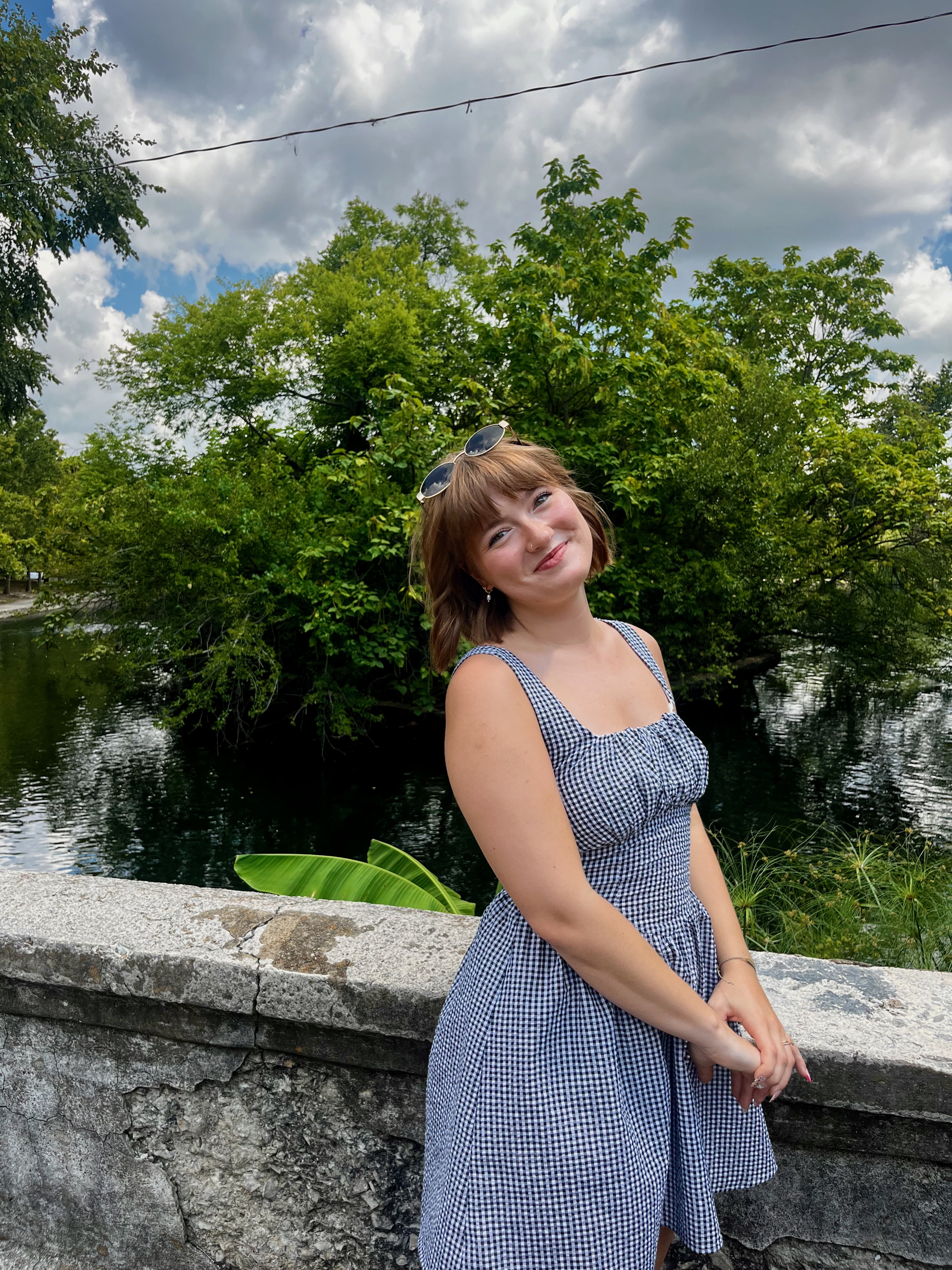
Kaytlin Vanderhorst
Kaytlin Vanderhorst BA, Psychology; BA, Education Studies (Wellness and Social Emotional Learning)
Hometown Deming, Washington
Experience Founder and co-leader of WANDR (Wellness and Resilience Club); Assistant Resident Director; Peer Academic Adviser; student leader supporting first- and second-year students through wellness- and SEL-informed community spaces; coursework and projects centered on mental health, neurodiversity and supportive education systems; undergraduate presenter at the National Association of School Psychologists (NASP) conference on student-led wellness and SEL skill-building.
Inspiration “Community was such an important part of my high school experience. Coming to the UW, I really wanted to find spaces where people support each other. Mental health has always mattered to me, and I want to help create environments where students feel understood and supported.”
Both Kaytlin and Owen care deeply about wellness and social-emotional learning, but in different ways. Kaytlin is especially interested in social psychology, relationships and mental health. “I love understanding how to support others,” she says. “Mental health has always been a passion of mine.” She also talks about her brother, who has autism, and how that shaped her interest in neurodiversity and supportive learning environments.
For Owen, advocacy has been part of his life since middle school. He’s focused on supporting people with intellectual and developmental disabilities (IDD). At the UW, he joined Best Buddies, a national organization centered on IDD support. “I also care deeply about supporting neurodivergent students more broadly,” he says. “Psychology gives us tools to make a significant difference for underserved communities.”
Both students point to Dr. Lally as someone who helped guide their paths. “She helped me realize what I wanted to do,” Owen says. “Her support has been invaluable, especially while applying to NASP and the School Psychology program.” Kaytlin agrees. “She’s been amazing. She introduced the idea of applying to the National Association of School Psychologists conference (NASP), and from there, we started brainstorming projects, including our club.”
That club is WANDR, the Wellness and Resilience Club. Kaytlin and Owen helped create it, so students could keep practicing the social-emotional and DBT-based skills they learned in their wellness classes. The club meets every other week and also plans more casual hangouts and outdoor activities in between. The goal is simple: give people a place to show up, practice skills and feel supported.
Owen Harwood BA, Psychology; BA, Education Studies (Wellness and Social Emotional Learning)
Hometown Othello, Washington
Experience Member of Best Buddies at UW; co-founder and co-leader of WANDR (Wellness and Resilience Club); undergraduate researcher presenting at the National Association of School Psychologists (NASP) conference on student-led wellness and SEL skill-building.
Inspiration “I’ve always cared about advocating for people with intellectual and developmental disabilities. Learning psychology gave me tools to actually do something with that. I like work that’s about supporting others and building community, especially in school settings.”
WANDR also became the foundation for something they didn’t expect — a proposal to present at the NASP conference. It’s uncommon for undergraduates to present there, but their project was accepted. The research looks at how students use SEL and DBT skills in a peer-led club setting and tracks things like sense of community and well-being during the club’s early months.
“Our goal is to show the potential impact of student-led organizations on student wellness,” Owen says. Kaytlin adds, “We hope attendees see that undergraduates truly want spaces focused on mental health prevention and wellness. Transitioning to college can be challenging; built-in support systems matter.”
As they talk about presenting at NASP, both light up. There’s excitement, nerves and a lot of anticipation. “Being in a space with people who are doing what we hope to do someday is inspiring,” Kaytlin says. Owen adds, “Getting to share our work and insights with others will be a fantastic opportunity.”